
While 2025 delivered serious setbacks for global climate action, it also brought meaningful progress. Against a backdrop of rising emissions and insufficient national commitments, there were real advances worth recognizing — from a clean energy surge to technological breakthroughs and stronger international cooperation.
Solar and wind power expanded rapidly enough to meet all new global electricity demand during the first three quarters of 2025, according to UK-based energy think tank Ember. At the same time, falling battery prices, expanding investment, and new uses for artificial intelligence are reshaping the economics and effectiveness of climate solutions.
Global greenhouse gas emissions continued to rise this year, and countries remain far from the reductions needed to avoid the worst impacts of climate change. Still, the pace of decarbonization is far faster than experts expected a decade ago. Investment in the clean energy transition — spanning renewables, batteries, power grids, and storage — is projected to reach a record $2.2 trillion globally in 2025, according to the Energy and Climate Intelligence Unit (ECIU).
“Is this enough to keep us safe? No, it clearly isn’t,” said Gareth Redmond-King, international lead at ECIU. “But is it remarkable progress compared to where we were headed? Absolutely.”
Here’s a look at what went right for the climate in 2025.
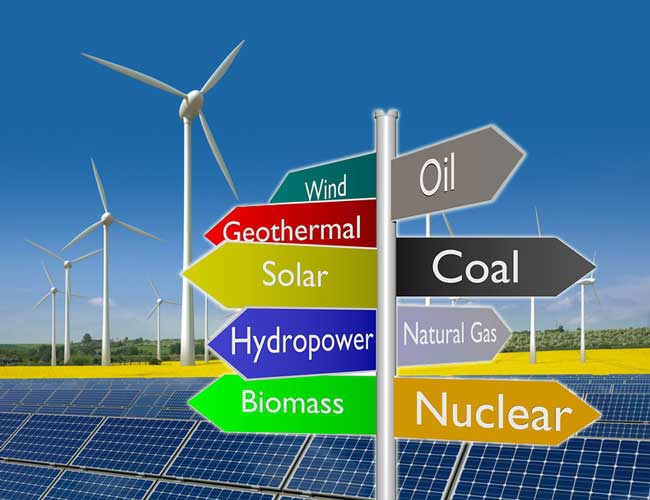
A Clean Energy Boom
Investment in clean technologies continued to outpace spending on fossil fuels. For every dollar invested in fossil energy projects, two dollars flowed into clean power globally, according to ECIU. In China, the European Union, the United States, and India — the world’s four largest emitters — that ratio rose to $2.60.
Spending on renewable power reached another record in the first half of the year, rising 10% from the same period in 2024 to $386 billion, according to BloombergNEF. Solar and wind installations expanded so quickly that global renewable capacity is expected to grow by 11% in 2025, setting a new annual record.
Over the past three years, renewable capacity has increased by nearly 30% on average, putting the world within reach of the COP28 goal — agreed in Dubai in 2023 — to triple clean power capacity by 2030.
China remains the dominant force, delivering an estimated 66% of new global solar capacity and 69% of new wind capacity this year. Renewables also continued to gain ground across Asia, Europe, and South America.
AI’s Growing Climate Contribution
The rapid expansion of artificial intelligence — and its enormous power demand — is reshaping clean energy investment. Funding for technologies that support data centers, including renewables, grid upgrades, and next-generation nuclear reactors, has already surpassed total clean tech investment for all of 2024, marking the sector’s first annual growth since its 2022 peak.
Despite political headwinds in the US, including President Donald Trump’s rollback of climate policies, the S&P clean energy index rose roughly 50% this year, outperforming most major stock indices and even gold. This renewed investor interest has also helped channel capital into modernizing power grids, a critical pillar of the energy transition.
Beyond energy demand, AI is accelerating climate solutions and scientific research. Waymo’s self-driving electric vehicles use AI to optimize routes and reduce idling. Infrastructure inspectors deploy AI-powered scanning tools to monitor bridges under extreme heat. Researchers use AI to track endangered species, while meteorologists rely on it to improve weather forecasting accuracy.
Cheaper Batteries Unlock New Possibilities
Battery prices — long a barrier to widespread electrification — continued their downward trend. The average cost per kilowatt-hour fell 8% this year to a record low of $108, with a further 3% decline expected in 2026, according to BloombergNEF.
Improved manufacturing techniques, cheaper chemical formulations, and excess production capacity have more than offset rising prices for battery metals. The result is better economics for everything from electric lawn equipment to commercial drones and electric vehicles.
The biggest impact may be in large-scale energy storage. Utility-scale batteries that store solar and wind power for use during peak demand are rapidly becoming one of the most cost-effective power sources available.
In the US alone, the Energy Information Administration estimates that 18.2 gigawatts of storage capacity came online in 2025 — a 77% increase over the previous year and nearly one-third of all new power capacity added.
International Progress Amid Political Turbulence
Despite the US withdrawing from the Paris Agreement, international climate cooperation saw important advances.
The High Seas Treaty reached the required number of ratifications and will enter into force in January 2026. The agreement allows for the protection of the 60% of the ocean that lies outside national jurisdictions, establishing rules for environmental protection, impact assessments, and marine conservation in international waters for the first time.
Meanwhile, the International Court of Justice issued a landmark advisory opinion stating that countries may be violating international law if they fail to pursue policies consistent with limiting global warming to 1.5°C. While not legally binding, the ruling gives climate advocates a powerful new tool to pressure governments into stronger action.

Shifts in Climate Policy
While US federal climate policy moved backward, other countries pressed ahead. Australia, Denmark, and the UK announced more ambitious emissions targets. China’s goals were more cautious, but many experts expect it to exceed its stated aim of cutting emissions 7–10% from peak levels by 2035, given the pace of clean energy deployment.
Cities are also reshaping climate policy on the ground. In January, New York City introduced congestion pricing measures aimed at reducing traffic and encouraging walking and cycling. By April, congestion had eased, travel times had improved, and researchers later identified a 22% reduction in harmful particulate pollution in the affected areas.
Overall, ECIU research suggests climate policy is becoming more deeply embedded in national governance. While US rollbacks reduced the share of the global economy covered by net-zero targets to just over 80%, down from more than 90% in 2024, state-level and international policies helped prevent a steeper decline.
Wins for Climate Adaptation
Adaptation efforts also gained momentum. In November, the Bill & Melinda Gates Foundation announced a $1.4 billion commitment over four years to expand climate-resilient agricultural innovations across Africa and Asia. At the UN climate summit, countries agreed to triple adaptation finance to $120 billion annually by 2035.
Extreme weather underscored both the risks of climate change and the value of financial preparedness. Hurricane Melissa devastated Jamaica, triggering a full $150 million payout from the country’s catastrophe bond and helping validate these instruments as a way to transfer climate risk to capital markets.
Catastrophe bonds are increasingly being used not only for recovery, but also for prevention. This year, North Carolina issued a new bond that incentivizes climate adaptation. If losses remain low, funds are reinvested in wind-resistant “super roofs,” reducing future insurance claims and costs. The bond attracted $600 million in investor interest — nearly double its initial offering.
Despite the scale of the climate challenge, 2025 demonstrated that progress is possible. Clean energy is accelerating, technology is unlocking new solutions, and adaptation is finally gaining attention. The gains are not yet enough — but they are real, and they matter.
Source: By Laura Millan, Coco Liu, Olivia Rudgard, and Kyle Stock
December 24, 2025, ©2025 Bloomberg L.P. All Rights Reserved.
 Green Officer