
Abstract
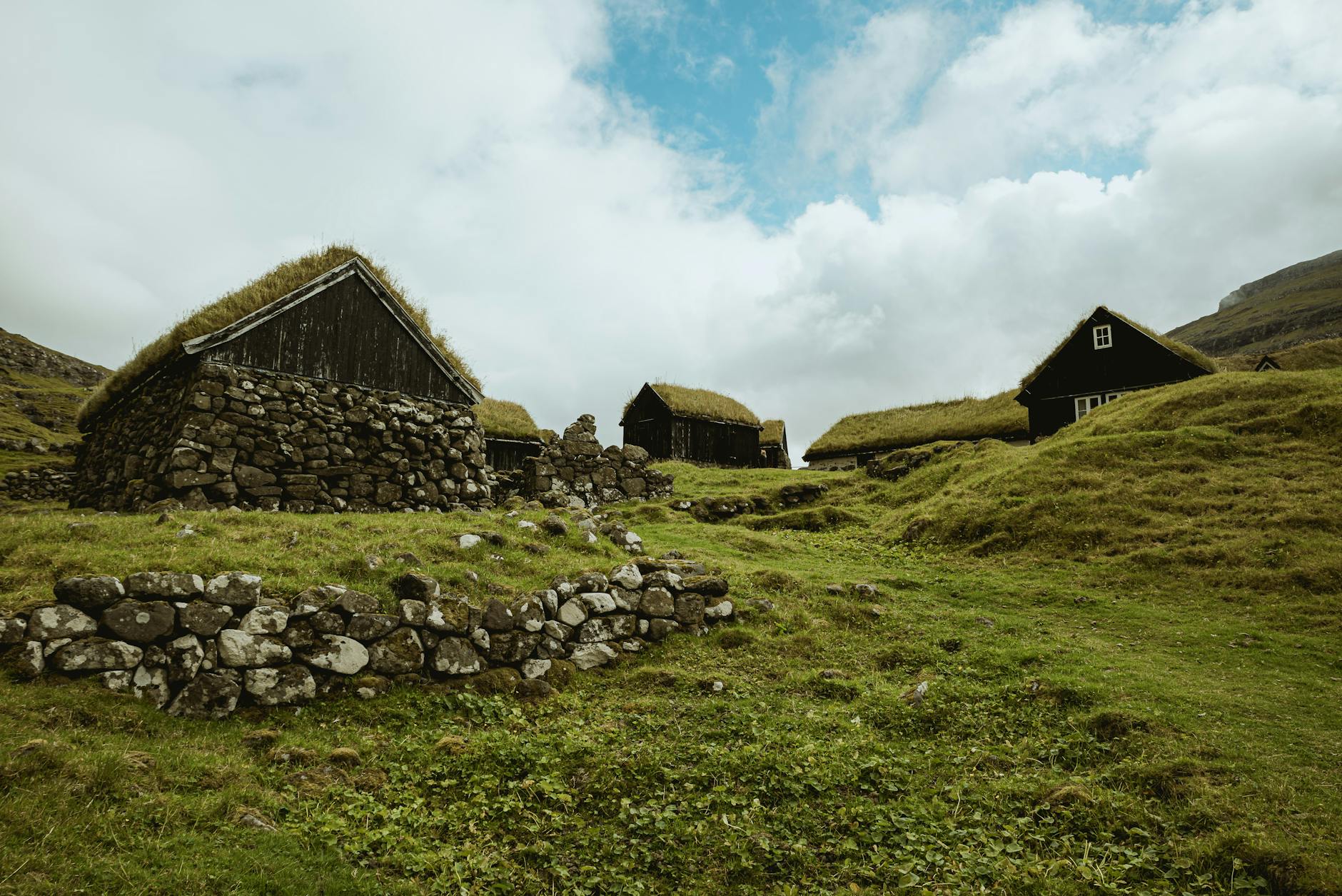
Greenland is frequently cited as a paradigmatic example of misleading geographical nomenclature, given that more than 80% of its surface is currently covered by permanent ice. This apparent contradiction has often been attributed to deliberate exaggeration or strategic misrepresentation by early Norse explorers. However, an increasing body of peer-reviewed paleoclimatic, archaeological, and historical-geographical research suggests that the name Greenland reflected observable environmental conditions during the period of initial Norse settlement in the late tenth century AD.
This paper synthesizes paleoclimate reconstructions, historical documentation, and spatial environmental analysis in order to reassess the climatic and geographical context in which Greenland was named. Particular emphasis is placed on the Medieval Warm Period, the spatial heterogeneity of Greenland’s landscape, and the role of human–environment interaction in shaping landscape perception. The findings demonstrate that the designation Greenland was both temporally and regionally accurate and underscore the importance of climatic variability in the interpretation of historical toponymy.
Keywords
Greenland; Paleoclimatology; Medieval Warm Period; Historical geography; Norse settlements; Climate variability
1. Introduction
The discrepancy between Greenland’s modern ice-dominated landscape and its evocative name has long attracted scholarly and popular interest. At face value, the term Greenland appears incompatible with a region whose interior is dominated by one of the largest ice sheets on Earth, exerting a significant influence on global sea-level dynamics and climate feedback mechanisms. This contradiction has frequently been framed either as a historical curiosity or as evidence of deliberate misrepresentation by Erik the Red, the Norse explorer traditionally credited with naming the island.
Such interpretations, however, tend to neglect the inherently dynamic nature of Earth’s climate system and the importance of temporal context in geographical analysis. Climate variability on centennial timescales has repeatedly reshaped high-latitude environments, altering both physical landscapes and human perceptions of them. Advances in paleoclimatology over the past decades—particularly high-resolution ice-core and marine proxy records—now allow for more robust reconstructions of past climate conditions in the North Atlantic region.
This study reassesses the naming of Greenland within its appropriate climatic, geographical, and historical framework. It argues that the name reflected localized environmental realities observed during a climatically favorable period rather than an attempt to describe the entire island’s geography. In doing so, the paper contributes to broader discussions on climate–human interactions and the role of environmental perception in historical geography.
2. Materials and Methods
This research adopts an interdisciplinary qualitative synthesis of peer-reviewed paleoclimatic data, historical sources, and geographical analyses. Paleoclimate evidence is primarily derived from Greenland ice-core records, including stable isotope analyses and accumulation data, which provide insights into temperature variability and atmospheric conditions during the late Holocene. Additional climatic context is drawn from marine sediment records documenting sea-ice extent and ocean circulation patterns in the North Atlantic.
Historical evidence concerning Norse exploration and settlement is obtained from Icelandic sagas, complemented by archaeological findings and historical scholarship that contextualize these narratives. Geographical analysis relies on modern spatial datasets describing ice-sheet distribution, vegetation zones, and coastal geomorphology.
Rather than generating new empirical data, the methodological approach emphasizes integrative interpretation, linking large-scale climatic processes with localized environmental conditions and human perception. This approach is consistent with the interdisciplinary scope of journals such as Global and Planetary Change.
3. Results and Discussion
3.1 Paleoclimatic Context of the Medieval Warm Period
The Norse settlement of Greenland coincided with the Medieval Warm Period (approximately 900–1300 AD), a phase characterized by relatively elevated temperatures across parts of the Northern Hemisphere. Although the spatial extent and magnitude of this warming remain debated, multiple independent proxy records indicate milder climatic conditions in the North Atlantic during this interval (Mann et al., 2009; IPCC, 2021).
Ice-core records from Greenland reveal isotopic signatures consistent with warmer mean annual temperatures, while marine sediment data indicate reduced sea-ice extent and enhanced oceanic connectivity. These conditions would have facilitated navigation and seasonal biological productivity along Greenland’s southern coasts.
3.2 Spatial Heterogeneity of Greenland’s Landscape
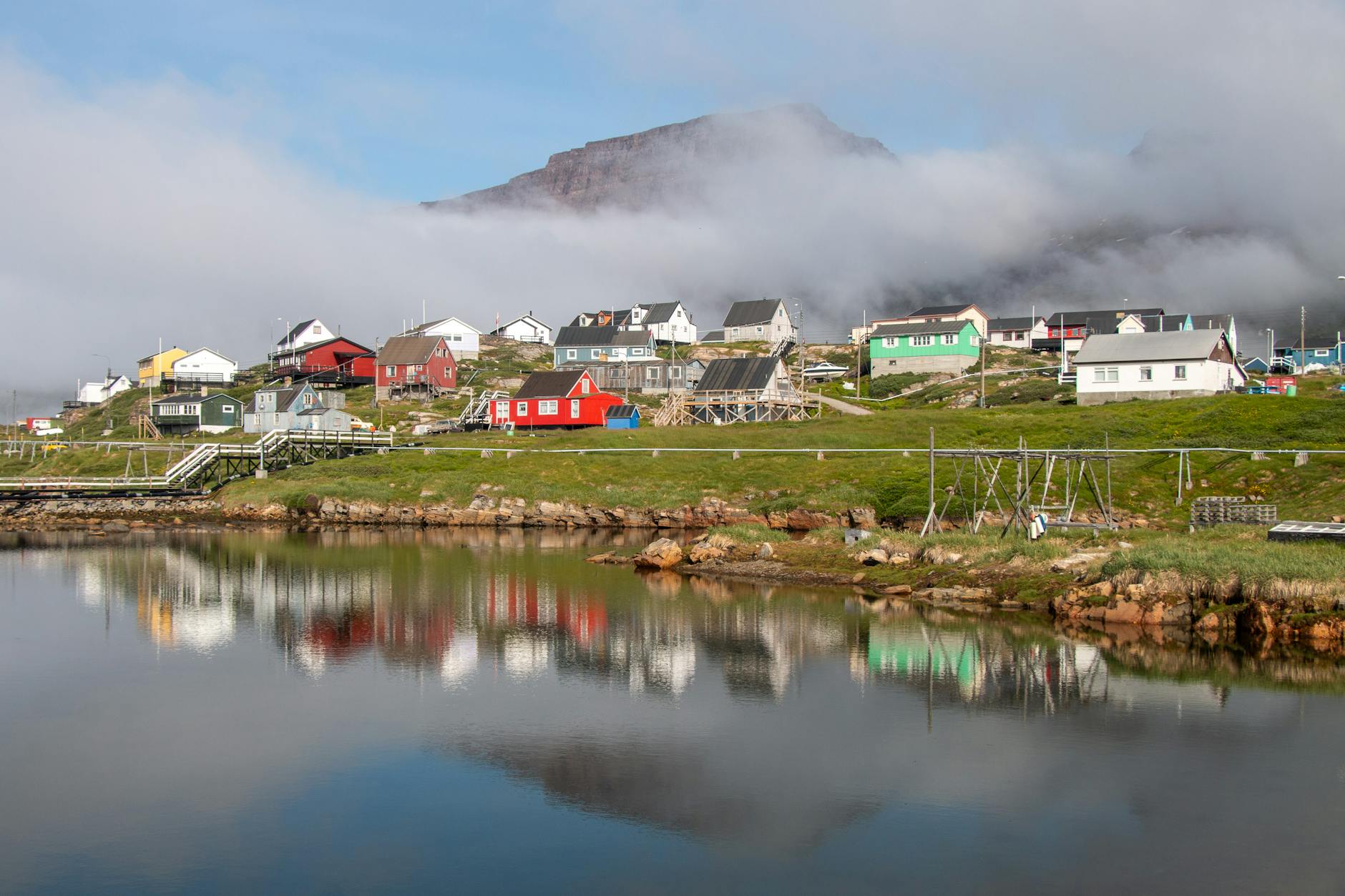
Despite its popular portrayal as a uniformly ice-covered landmass, Greenland exhibits pronounced spatial heterogeneity. The central ice sheet dominates the interior, but peripheral coastal regions—particularly in the south and southwest—remain seasonally ice-free and capable of supporting tundra vegetation and grasslands.
Archaeological evidence demonstrates that Norse settlers practiced pastoralism in these regions, including livestock grazing and hay production (McGovern et al., 2007). For settlers arriving by sea, these vegetated fjord landscapes would have constituted the most immediate and defining environmental impression, strongly influencing the naming of the region.
3.3 Human Perception, Toponymy, and Strategic Communication
Toponymy reflects not only physical geography but also human perception, comparative experience, and socio-economic intent. For settlers originating from Iceland—an environment characterized by limited biomass and extensive volcanic terrain—the comparatively greener coastal zones of southern Greenland may have appeared notably fertile.
Historical accounts suggest that Erik the Red emphasized Greenland’s favorable aspects to encourage settlement. However, this strategic communication was grounded in observable environmental conditions rather than pure fabrication. The name Greenland thus represents a socially constructed but environmentally informed toponym.
3.4 Climatic Deterioration and Landscape Transformation
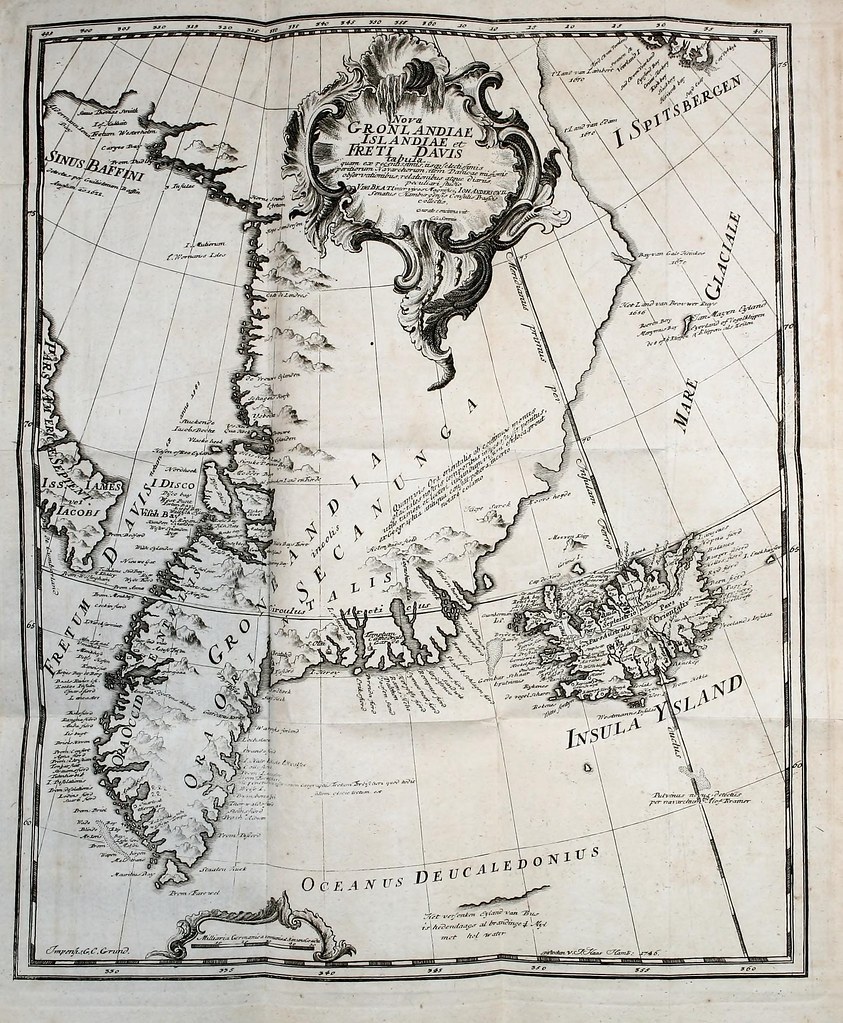
The transition from the Medieval Warm Period to the Little Ice Age (approximately 14th–19th centuries) brought cooler temperatures, advancing glaciers, and increased sea-ice extent. These changes substantially altered Greenland’s environment and contributed to the eventual abandonment of Norse settlements.
The modern perception of Greenland as an overwhelmingly ice-covered landscape is therefore the result of later climatic conditions rather than a reflection of the environment encountered during the period of naming.
4. Conclusions
The synthesis of paleoclimatic, historical, and geographical evidence indicates that the name Greenland was neither arbitrary nor misleading. Instead, it reflected a temporally and regionally specific environmental reality observed by early Norse settlers during a climatically favorable period.
This case study underscores the importance of climatic variability and temporal context in interpreting geographical nomenclature and contributes to broader discussions on climate–human interactions and landscape perception in Earth system history.
References
Dugmore, A.J., Keller, C. and McGovern, T.H. (2007) Norse Greenland settlement and limits of adaptation. In: Sustainability or Collapse? Cambridge, MA: MIT Press, pp. 61–88.
IPCC (2021) Climate Change 2021: The Physical Science Basis. Cambridge: Cambridge University Press.
Mann, M.E., Zhang, Z., Hughes, M.K., Bradley, R.S., Miller, S.K., Rutherford, S. and Ni, F. (2009) Global signatures and dynamical origins of the Little Ice Age and Medieval Climate Anomaly. Science, 326(5957), pp. 1256–1260.
McGovern, T.H., Perdikaris, S., Arneborg, J. et al. (2007) Landscape of settlement in northern Greenland. Human Ecology, 35(1), pp. 1–20
Research Articles
Marine Shielings in Medieval Norse Greenland
Christian Koch Madsen
Arctic Anthropology, November 2019, 56 (1) 119-159; DOI:
https://doi.org/10.3368/aa.56.1.119, https://aa.uwpress.org/content/56/1/119
 Green Officer