
Literature, Art, Generic research, EESL inspired Logo
Abstract
The white swan occupies a privileged symbolic position in Western and non-Western literary traditions. Associated with purity, beauty, fidelity, transcendence, and transformation, the swan has served as a powerful metaphor in myth, poetry, fairy tales, and modern philosophical discourse. This paper examines the symbolic meanings of the white swan across literary history, tracing its origins in classical mythology, its evolution in medieval and Romantic literature, and its reinterpretation in modern and postmodern contexts. Through close textual analysis and comparative symbolism, the study argues that the white swan functions not merely as an aesthetic emblem but as a complex literary signifier embodying ideals of moral perfection, spiritual ascent, and the tension between appearance and essence. By situating the white swan within broader symbolic systems—color symbolism, animal symbolism, and mythic transformation—this paper demonstrates its enduring relevance and adaptability in literary expression.
1. Introduction
Animal symbolism has long played a central role in literature, enabling writers to convey abstract ideas through familiar natural forms. Among these animals, the swan—particularly the white swan—has emerged as one of the most enduring and symbolically dense figures. Appearing in ancient myths, medieval bestiaries, Romantic poetry, fairy tales, and modern philosophical metaphors, the white swan transcends mere ornamentation to become a carrier of ethical, aesthetic, and metaphysical meaning.
The white swan’s symbolic resonance derives from a confluence of factors: its striking physical appearance, its perceived grace and monogamy, its liminal existence between water and air, and its historical rarity in certain regions. Literature has repeatedly invested the white swan with meanings of purity, ideal beauty, fidelity, and spiritual transformation, often positioning it as an emblem of unattainable perfection or transcendent truth.
This paper seeks to provide a comprehensive literary analysis of the white swan as a symbol. It addresses the following questions:
- What are the primary symbolic meanings associated with the white swan in literature?
- How do these meanings evolve across historical periods and literary genres?
- In what ways does the white swan function as a metaphor for transformation, identity, and the soul?
To answer these questions, the paper adopts an interdisciplinary approach, drawing on literary criticism, mythology, semiotics, and cultural history.
2. Mythological Origins of the White Swan Symbol
2.1 Greek and Roman Mythology
The symbolic significance of the white swan in Western literature can be traced to classical antiquity. In Greek mythology, the swan is closely associated with Apollo, the god of light, music, poetry, and prophecy. According to myth, Apollo’s chariot was sometimes drawn by swans, reinforcing their connection to harmony, beauty, and divine order (Graves, 1955). As a creature linked to both water and air, the swan symbolized balance between emotional depth and intellectual elevation.
Perhaps the most famous myth involving a swan is Zeus’s transformation into a white swan to seduce Leda. This myth, later reimagined by poets such as Ovid and W. B. Yeats, imbues the swan with erotic, divine, and transformative qualities (Ovid, Metamorphoses). Here, whiteness signifies not innocence but divine disguise—purity as appearance rather than moral reality.
2.2 The Swan Song
Another classical motif is the belief that swans sing a beautiful song just before death. Plato refers to this in Phaedo, suggesting that the swan’s final song is an expression of joy rather than sorrow, as the bird anticipates reunion with the divine (Plato, trans. 1997). This idea profoundly influenced later literary traditions, establishing the swan as a symbol of noble death, prophetic insight, and transcendence.
3. Color Symbolism and the Meaning of Whiteness
The symbolic power of the white swan cannot be separated from the cultural meanings of the color white. In Western literary traditions, white is commonly associated with purity, innocence, light, and spiritual perfection (Cirlot, 1962). When applied to an animal already associated with grace and harmony, whiteness intensifies these qualities.
However, literary symbolism is rarely univocal. White can also signify emptiness, idealization, or unattainable perfection. Thus, the white swan often represents not only purity but also an idealized form of beauty that exists beyond the reach of ordinary human experience.
In contrast to darker animals or settings, the white swan frequently appears in idyllic or liminal spaces—lakes, moonlit waters, enchanted gardens—locations that themselves symbolize transition and reflection. These settings reinforce the swan’s role as a mediator between worlds: human and divine, physical and spiritual.
4. Medieval and Renaissance Interpretations
4.1 Bestiaries and Moral Allegory
In medieval bestiaries, animals were interpreted allegorically, each embodying a moral or spiritual lesson. The swan was often depicted as outwardly beautiful but sometimes morally ambiguous, warning readers against judging by appearances alone (Physiologus, trans. 1979). This duality complicates the later Romantic idealization of the white swan.
Nonetheless, in Christian symbolism, whiteness was strongly associated with purity of soul and divine grace. As a result, the white swan increasingly became a positive symbol, representing spiritual refinement and the soul’s aspiration toward God.
4.2 Courtly Love and Chivalric Romance
During the Renaissance, the white swan appeared in chivalric romances and courtly love poetry as an emblem of idealized femininity and unattainable love. Its grace and distance mirrored the conventions of courtly love, in which the beloved is admired from afar and placed on a pedestal (Huizinga, 1924).
5. Romanticism and the Aesthetic Ideal
The Romantic movement marked a turning point in the symbolic use of the white swan. Romantic poets were deeply invested in nature as a source of spiritual truth and emotional authenticity. The swan, serene and solitary, became an emblem of the poet’s own artistic and emotional sensibility.
In the poetry of William Wordsworth, swans often appear as part of a harmonious natural order, reflecting inner calm and spiritual continuity. Samuel Taylor Coleridge similarly associates swans with imagination and transcendence.
The white swan’s most profound Romantic function, however, lies in its association with the artist and the soul. The swan’s perceived purity and its legendary “swan song” made it an ideal metaphor for artistic creation, especially the idea of a final, perfect expression.
6. Transformation and Identity: Fairy Tales and Metamorphosis
6.1 Hans Christian Andersen’s The Ugly Duckling
One of the most influential literary representations of the white swan appears in Hans Christian Andersen’s The Ugly Duckling (1843). In this tale, the transformation of the despised duckling into a white swan symbolizes self-realization, inner worth, and the triumph of authentic identity over social judgment (Andersen, 1843).
The white swan here functions as the final form of the soul, suggesting that true identity is innate and revealed through suffering and growth. Unlike classical myths, where transformation is imposed by divine force, Andersen’s swan represents psychological and moral maturation.
6.2 Metamorphosis as a Literary Device
More broadly, the white swan often appears in narratives of metamorphosis as a symbol of spiritual ascent. Transformation into a swan implies purification, elevation, and reconciliation between the inner self and outward form. This theme resonates across cultures and literary traditions.
7. The White Swan and the Concept of Ideal Love
Swans are widely believed to form lifelong pair bonds, a belief that has profoundly influenced their symbolic role in literature. The white swan thus frequently represents faithfulness, marital devotion, and eternal love.
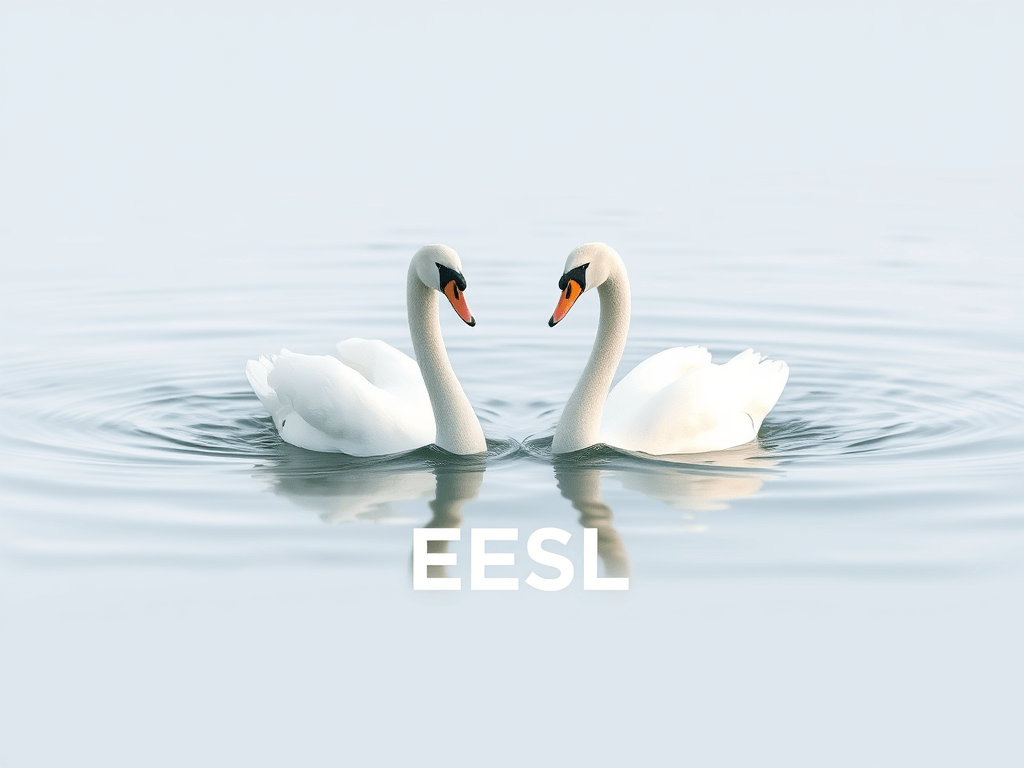
In poetry and folklore, paired white swans gliding across still waters symbolize harmony and emotional unity. Their mirrored movements reinforce the idea of reciprocal love and balance. This symbolism appears in wedding poetry, lyrical ballads, and mythic narratives across Europe and Asia.
8. Modern and Philosophical Reinterpretations
8.1 The White Swan versus the Black Swan
In modern discourse, particularly following the work of philosopher Nassim Nicholas Taleb, the “white swan” has come to symbolize the predictable, expected, and conventional, in contrast to the disruptive “black swan” (Taleb, 2007). Although this usage is philosophical rather than literary, it draws upon long-standing symbolic associations of whiteness with normativity and order.
In literature, this contrast has encouraged more ironic or critical uses of the white swan, challenging its traditional associations with purity and perfection.
8.2 Psychological and Archetypal Readings
From a Jungian perspective, the white swan may be interpreted as an archetype of the Self, representing psychic integration and wholeness (Jung, 1964). Its appearance often coincides with moments of insight or reconciliation within the narrative.
9. Conclusion
The white swan is one of literature’s most enduring and multifaceted symbols. From its mythological origins as a divine and prophetic creature to its Romantic elevation as an emblem of beauty and artistic purity, and finally to its modern reinterpretations as a symbol of identity and expectation, the white swan has continuously adapted to changing cultural and literary contexts.
What unites these diverse representations is the swan’s consistent association with transcendence—whether moral, aesthetic, emotional, or spiritual. The white swan embodies humanity’s longing for purity, harmony, and self-realization, even as literature increasingly interrogates the attainability of these ideals.
In this sense, the white swan remains not merely a symbol of perfection, but a mirror reflecting humanity’s deepest aspirations and contradictions.
References
Andersen, H. C. (1843). The Ugly Duckling.
Cirlot, J. E. (1962). A Dictionary of Symbols. Routledge.
Graves, R. (1955). The Greek Myths. Penguin.
Huizinga, J. (1924). The Waning of the Middle Ages.
Jung, C. G. (1964). Man and His Symbols. Doubleday.
Ovid. Metamorphoses.
Plato. (1997). Phaedo (trans. G. M. A. Grube). Hackett.
Taleb, N. N. (2007). The Black Swan. Random
 Green Officer