
Abstract
Greece is warming faster than the global average in many regions while facing increasing heatwaves, drought, wildfires, floods and water stress. The country has responded with a National Climate Law, a National Energy and Climate Plan (NECP) and a National Adaptation Strategy. Yet the existence of legislation and plans does not guarantee implementation at the speed required by rapidly increasing climate risks. Available evidence indicates a persistent gap between the scale of projected impacts and the pace, coordination and financing of adaptation and resilience measures. This gap has economic consequences. Agriculture, tourism, infrastructure, labour productivity, ecosystems and public finances are all exposed to climate-related losses. Earlier modelling by the Bank of Greece estimated cumulative economic losses exceeding €700 billion by 2100 under an inaction scenario, while more recent sectoral research continues to identify substantial losses to agricultural production and employment. These estimates should not be interpreted as a literal future government debt, but as an erosion of future national income and productive capital. The central economic question is therefore not whether climate change will impose costs on Greece, but whether Greece will pay those costs through preventive investment today or through lost output, damaged assets and higher fiscal burdens tomorrow.
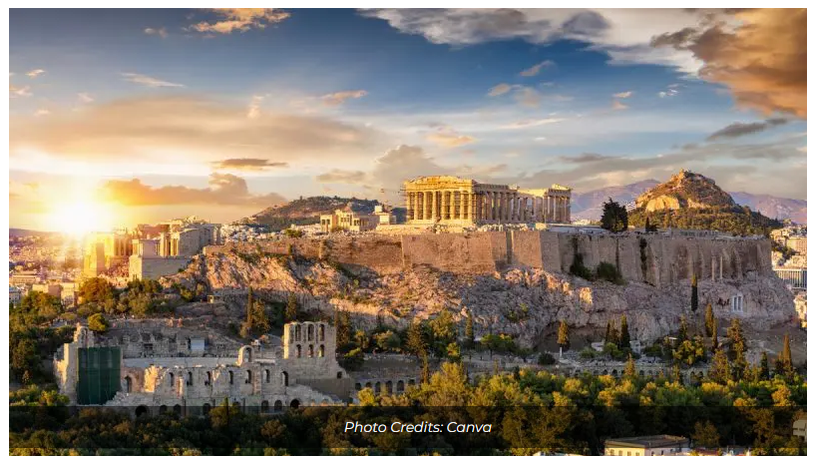
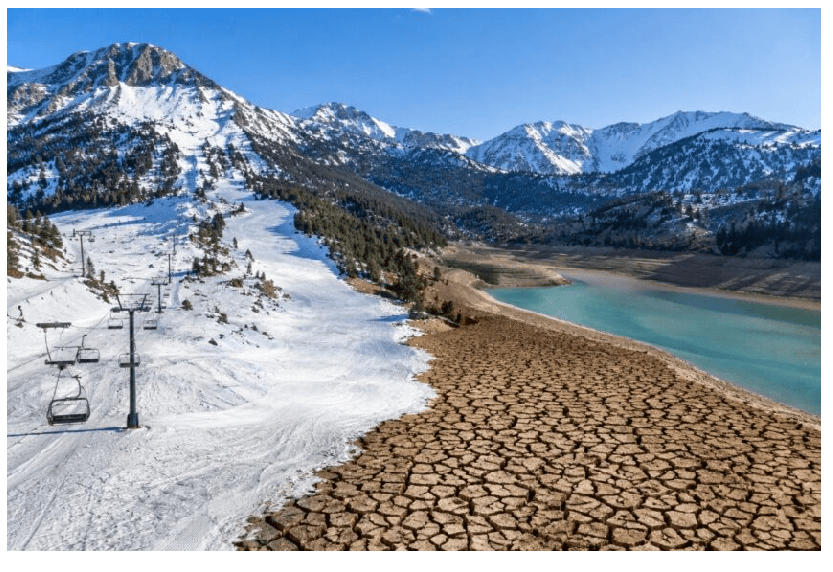
Climate risk is no longer a distant scenario
Greece occupies one of Europe’s most climate-sensitive regions. The Mediterranean is warming rapidly, while changes in precipitation, drought frequency, extreme heat and wildfire conditions are increasing pressure on ecosystems and economic activity. The European Environment Agency’s first European Climate Risk Assessment identified climate risks to food production, water resources, infrastructure, financial stability and human health as already reaching critical levels in parts of Europe. It concluded that European adaptation policies and actions are not keeping pace with the rapidly growing risks. (Ευρωπαϊκή Υπηρεσία Περιβάλλοντος)
For Greece, the implications are particularly important because economic activity is concentrated in sectors that depend strongly on climate and natural resources. Agriculture depends on water availability and temperature conditions; tourism depends on environmental quality and thermal comfort; transport and urban infrastructure are vulnerable to floods, heat and wildfires; and coastal settlements and assets face long-term sea-level rise.
The Bank of Greece’s Climate Change Impacts Study Committee projected substantial increases in temperature and heatwave days and reductions in precipitation. Its more recent vulnerability assessment indicated that, under high-emissions conditions, heatwave days in lowland areas could increase by as many as 30–50 days annually by the end of the century, while approximately 40% of Greece could face desertification pressures. (Τράπεζα της Ελλάδος)
These are not simply environmental indicators. They are indicators of future productive capacity.
Greece has climate policy—but implementation is the critical variable
It would be inaccurate to describe Greece as having no climate policy. Greece adopted its first National Climate Law in 2022, establishing legally defined targets for a reduction in net greenhouse-gas emissions of at least 55% by 2030 and 80% by 2040 relative to 1990, with climate neutrality targeted for 2050. (Υπουργείο Περιβάλλοντος και Ενέργειας)
Greece has also submitted an updated NECP, setting out policies for decarbonisation, renewable energy, energy efficiency and climate adaptation. (European Commission)
There has been measurable progress in emissions reduction. European Commission data indicate that Greek net greenhouse-gas emissions in 2024 were approximately 36% below 1990 levels, while emissions covered by the EU Emissions Trading System had fallen substantially from 2005 levels. Greece was also projected not to exceed its Effort Sharing Regulation emissions limits during 2021–2030. (Climate Action)
The central problem is therefore more subtle—and more consequential—than simple policy failure.
The problem is the implementation gap between formal commitments and the scale of climate risk.
European assessments repeatedly emphasise that achieving climate targets depends on implementing planned measures fully and rapidly, while adaptation remains less developed than mitigation. The European Commission’s 2025 climate progress assessment noted that many national plans still lack sufficiently comprehensive adaptation and water-resilience measures. (Climate Action)
Greece itself recognises this challenge. A 2025 peer-reviewed assessment of its adaptation governance described the development of a national monitoring and evaluation system as a necessary step for determining whether adaptation policies are actually being implemented and whether they are effective. The study highlights the need for systematic monitoring across national, regional and local levels. (Springer Nature Link)
This distinction matters. A law is not a seawall. A strategy is not a drought-resistant irrigation system. A climate budget is not the same thing as a completed project.
The economic costs are transmitted through multiple channels
The economic consequences of insufficient climate action do not arise from a single catastrophic event. They accumulate through many interacting mechanisms.
Agriculture
Agriculture is among Greece’s most climate-sensitive economic sectors. Higher temperatures, declining water availability, soil degradation and extreme events can reduce yields and increase production costs.
Recent modelling of the Greek agri-food sector estimates direct annual climate-related losses in crop and livestock production of roughly €437 million to more than €1 billion by 2060, depending on the climate scenario and intensity of extreme events. When indirect effects on sectors such as food processing, hotels and restaurants are included, the economic consequences approximately double. Under a high-emissions scenario, the study estimates an annual GDP reduction of up to 0.35% by 2041–2060 under average extreme-event assumptions, rising to approximately 0.57% under a severe extreme-event scenario. (MDPI)
These losses matter beyond agriculture. A decline in agricultural production reduces demand throughout supply chains, lowers rural incomes and can increase food prices.
Tourism
Tourism is another critical transmission mechanism. Greece’s tourism economy depends on beaches, ecosystems, cultural heritage, water availability and a climate that is comfortable for visitors.
Research examining Greek tourist destinations has found that climate change can alter the climatic attractiveness of beach, urban and mountain destinations. (MDPI)
The risk is not necessarily that tourists will suddenly stop visiting Greece. A more plausible economic pathway is gradual restructuring: shorter periods of comfortable summer activity, greater demand for shoulder-season travel, rising cooling and water costs, greater wildfire exposure and increased investment requirements for hotels and infrastructure.
For a tourism-dependent economy, this distinction is crucial. Climate change can reduce the productivity of existing capital even when that capital remains physically intact.
Wildfires and infrastructure
Wildfires provide another direct connection between climate risk and GDP. A large empirical study of 233 regions in Southern Europe—including Greek regions—found that experiencing a wildfire was associated with a reduction of approximately 0.11–0.18 percentage points in annual regional GDP growth. Employment growth in retail and tourism-related activities was also adversely affected. (ScienceDirect)
The mechanism extends beyond the immediate cost of firefighting and rebuilding. Fires destroy productive forests, agricultural land, homes and tourism assets; disrupt transport; reduce visitor demand; and divert public expenditure from investment towards reconstruction.
Floods generate a similar fiscal mechanism. When infrastructure is damaged, governments must spend twice: first to repair the damage and second to replace investments that might otherwise have increased productive capacity.
Heat is an economic shock
Extreme heat is often discussed primarily as a public-health problem. It is also a productivity problem.
Heat reduces workers’ physical and cognitive capacity, increases cooling demand and can disrupt outdoor construction, agriculture, transport and tourism. European research estimates that heatwaves in selected recent hot years already produced aggregate economic damages equivalent to approximately 0.3–0.5% of European GDP, with impacts exceeding 1% of GDP in particularly vulnerable regions. Without additional mitigation or adaptation, projected damages could increase several-fold by 2060. (Nature)
For Greece, where a substantial proportion of economic activity occurs outdoors or in climate-sensitive environments, the exposure is particularly important.
This produces a feedback loop:
higher temperatures → lower productivity → lower output → lower tax revenues → greater public expenditure on health and adaptation → less fiscal space for productive investment.
Climate change can therefore become a constraint on economic growth even before considering the costs of major disasters.
The warning from Greece’s own central bank
Perhaps the most striking evidence comes from Greece’s own monetary authority.
The Bank of Greece’s interdisciplinary assessment estimated that, under a scenario of insufficient action by Greece and the international community, cumulative climate-related economic losses could exceed €700 billion by 2100. The same assessment estimated that adaptation investment could substantially reduce those losses, while strong mitigation could reduce them even further. (Τράπεζα της Ελλάδος)
The precise numerical value should not be treated as a forecast. It was produced using assumptions and modelling frameworks that necessarily contain uncertainty, and subsequent climate and economic developments have changed those assumptions.
Its significance is instead conceptual.
More than a decade ago, Greece’s central bank was already identifying climate change as a macroeconomic risk and concluding that prevention was economically preferable to inaction. More recent research has not eliminated that concern; it has provided additional evidence of sector-specific exposure and the need for stronger adaptation governance. (Τράπεζα της Ελλάδος)
The fact that Greece has known about these risks for years raises an important policy question: how much of the projected damage represents an unavoidable consequence of climate change, and how much represents the economic cost of delayed action?
The intergenerational economics of inaction
The phrase “future generations will pay” should be used carefully.
Climate damage is not equivalent to a conventional sovereign debt obligation that can be assigned to a future generation. Instead, the burden is transmitted through reductions in the stock of productive capital and natural capital, lower labour productivity, weaker public finances, higher insurance and infrastructure costs, and reduced economic opportunities.
A useful way to conceptualise this is as an intergenerational climate liability.
If a government spends €1 billion today on resilient water systems, wildfire prevention, urban cooling, forest management or flood protection, that expenditure appears immediately in public accounts. If it does not spend the money and a disaster occurs later, the future generation inherits damaged infrastructure, lost output and reconstruction costs.
The apparent saving today can therefore become a much larger economic liability tomorrow.
This is particularly important for Greece because public investment competes with other fiscal priorities. Climate damages can create a negative feedback: disasters increase expenditure precisely when climate resilience requires additional investment.
The European Environment Agency estimates that climate-related extreme events have already caused hundreds of billions of euros of damage across Europe since 1980 and warns that worsening climate impacts could significantly reduce European GDP this century. (Climate-ADAPT)
The economic case for adaptation is consequently not simply environmental. It is a question of capital preservation.
From emergency response to climate investment
Greece’s policy challenge should therefore move beyond the binary distinction between “acting” and “not acting”.
The country has already established important institutions and legal targets. The more difficult question is whether climate risk is being incorporated into every major investment decision.
Five priorities follow from the available evidence.
First, adaptation expenditure should be treated as productive investment rather than discretionary environmental spending. Flood protection, water infrastructure, wildfire prevention, resilient electricity networks and heat-resilient cities protect future economic output.
Second, regional adaptation must become more systematic. Climate risks differ substantially between Thessaly, Attica, the islands, the Peloponnese, northern Greece and other regions. National targets alone cannot identify where each euro of adaptation spending produces the greatest reduction in risk.
Third, water should be treated as strategic economic infrastructure. Agriculture, tourism, ecosystems and urban populations increasingly compete for a resource whose availability is becoming less predictable.
Fourth, climate policy should be evaluated against measurable outcomes rather than plans alone. Greece’s emerging adaptation monitoring and evaluation framework is therefore important: policies need indicators that establish whether resilience is actually improving. (Springer Nature Link)
Finally, climate risk should be incorporated into fiscal planning. Public investment appraisal should account for the probability that today’s infrastructure will operate under substantially different temperature, rainfall and wildfire conditions during its lifetime.
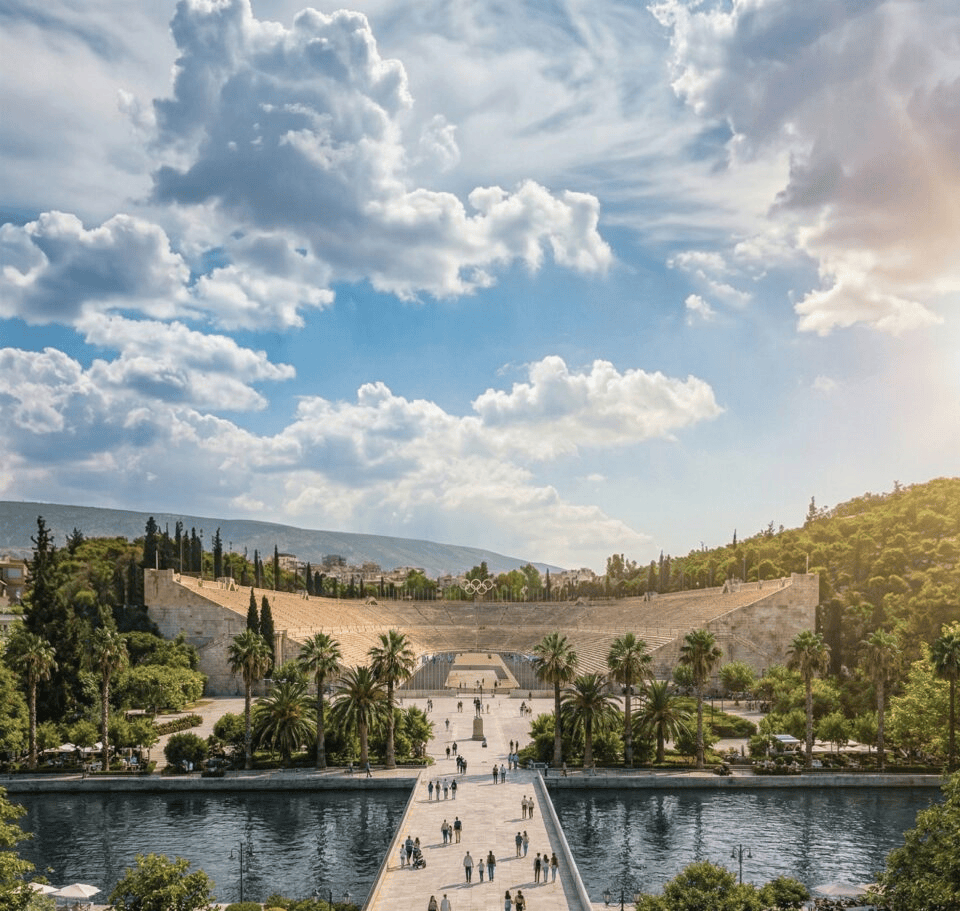
A choice between two bills
Greece cannot eliminate all climate damage. Nor can adaptation substitute for mitigation. The IPCC and wider scientific literature show that limiting warming reduces the magnitude of future physical and economic impacts, while adaptation reduces exposure and vulnerability. Economic-impact research also demonstrates substantial uncertainty, making robust investment and risk management particularly important. (Nature)
The relevant choice is therefore not between spending money on climate policy and avoiding costs.
It is between paying for resilience before damage occurs and paying for damage after it occurs.
Greece has already been warned about this choice. Its own central bank quantified the potential long-term cost of inaction more than a decade ago. Newer assessments show that climate risks are intensifying and that adaptation governance is still being strengthened. Meanwhile, extreme heat, drought and wildfire are increasingly affecting the economic sectors on which Greece depends.
The scientific and economic evidence does not support the conclusion that Greece has done nothing. It supports a more consequential conclusion: Greece has established much of the architecture required for climate action, but the implementation of that architecture must accelerate faster than the risks themselves.
If it does not, the cost will not disappear.
It will be transferred through lower productivity, damaged infrastructure, weaker ecosystems, higher public expenditure and foregone economic growth. In that sense, the largest climate bill facing Greece may not be a bill that future governments will receive.
It may be the GDP that future generations never produce.
References
- Intergovernmental Panel on Climate Change. Climate Change 2022: Impacts, Adaptation and Vulnerability. Contribution of Working Group II to the Sixth Assessment Report of the IPCC (Cambridge University Press, 2022).
- European Environment Agency. European Climate Risk Assessment. EEA Report 01/2024 (EEA, 2024). (Ευρωπαϊκή Υπηρεσία Περιβάλλοντος)
- Bank of Greece, Climate Change Impacts Study Committee. The Environmental, Economic and Social Impacts of Climate Change in Greece (Bank of Greece, 2011). (Τράπεζα της Ελλάδος)
- Bank of Greece. Climate change and the economy. Climate Change and Sustainability Centre. (Τράπεζα της Ελλάδος)
- Bank of Greece. Preliminary results of the studies on the vulnerability assessment and the impact of climate change in Greece (2023). (Τράπεζα της Ελλάδος)
- European Commission. Climate Action Progress Report 2025: Greece country factsheet (2025). (Climate Action)
- European Commission. Climate Action Progress Report 2025, Chapters 1, 3 and 6 (European Commission, 2025). (Climate Action)
- Hellenic Republic, Ministry of Environment and Energy. National Climate Law 4936/2022. (Υπουργείο Περιβάλλοντος και Ενέργειας)
- European Commission. Greece — Final updated National Energy and Climate Plan 2021–2030 (2025). (European Commission)
- Assimacopoulos, D., Sebos, I., Chioti, D. et al. Advancing climate change adaptation in Greece: development and implementation of a national monitoring and evaluation system. Euro-Mediterranean Journal for Environmental Integration 10, 4079–4090 (2025). doi:10.1007/s41207-025-00844-9. (Springer Nature Link)
- Climate Change Risks for the Mediterranean Agri-Food Sector: The Case of Greece. Agriculture 14, 770 (2024). (MDPI)
- Climate change impacts and adaptation options for the Greek agriculture in 2021–2050: A monetary assessment. Climate Risk Management 16, 164–182 (2017). doi:10.1016/j.crm.2017.02.002. (ScienceDirect)
- The regional economic impact of wildfires: Evidence from Southern Europe. Journal of Environmental Economics and Management 118, 102787 (2023). doi:10.1016/j.jeem.2023.102787. (ScienceDirect)
- Current and projected regional economic impacts of heatwaves in Europe. Nature Communications (2021). (Nature)
- Integrated perspective on translating biophysical to economic impacts of climate change. Nature Climate Change (2021). (Nature)
- Dependence of economic impacts of climate change on anthropogenically directed pathways. Nature Climate Change (2019). (Nature)
- Koundouri, P., Alamanos, A., Arampatzidis, I. et al. Assessing national climate-neutrality plans through a modelling nexus lens: the case of Greece. npj Climate Action (2025). (Nature)
- Koutroulis, A., Savelli, E., Tosic, M. et al. Promises and pitfalls of climate adaptation tools across the Mediterranean. Communications Earth & Environment (2026). (Nature)
 Green Officer